SERENITY in Morocco: the story behind the journey
‘It matters which places you visit and who you choose to support’
SERENITY in Morocco: the story behind the journey
‘It matters which places you visit and who you choose to support’
At SUITSUIT, we believe travel is about more than simply arriving somewhere. It is not a one-way experience where you only take what a destination has to offer, but an exchange in which you also give something back. Through attention, through choices, through the places you visit and the people you meet. That way of thinking also shapes how we travel ourselves. Our new SERENITY collection is a pure reflection of that.
At SUITSUIT, we believe travel is about more than simply arriving somewhere. It is not a one-way experience where you only take what a destination has to offer, but an exchange in which you also give something back. Through attention, through choices, through the places you visit and the people you meet. That way of thinking also shapes how we travel ourselves. Our new SERENITY collection is a pure reflection of that.
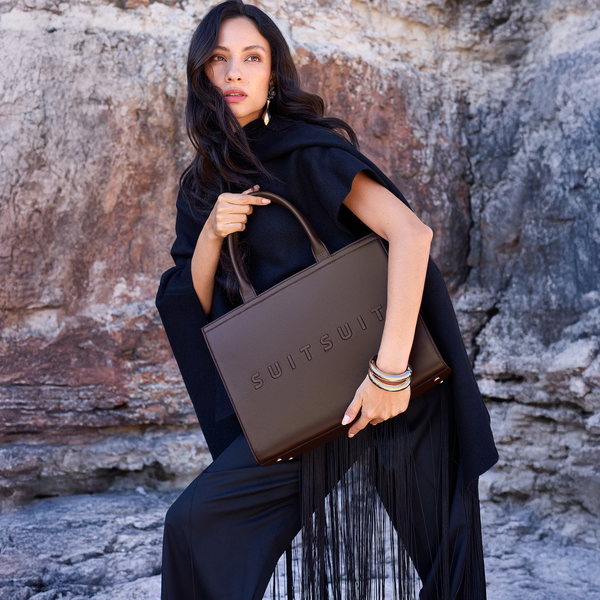
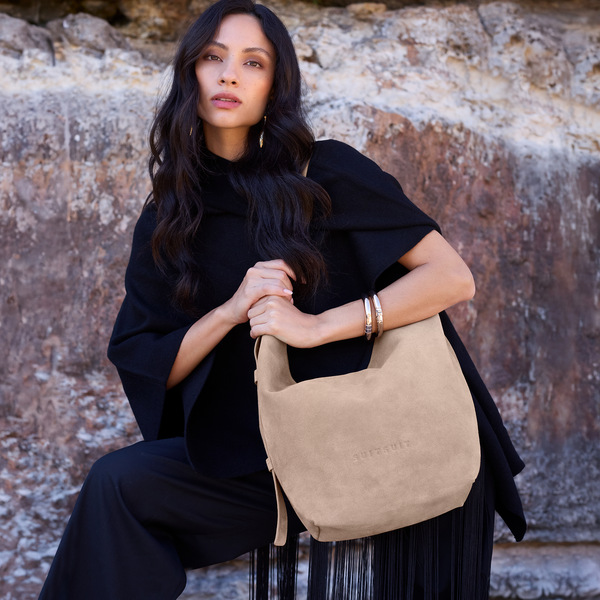
For the new SERENITY collection, Nadine Hartevelt and Mirthe Willems recently travelled to Morocco. Not only to capture the beauty of the landscape, but to look beyond the perfect picture. Where do you stay? Who do you work with? And how do you make sure that what you take with you also means something to the local community? For Nadine and Mirthe, this journey became more than a campaign shoot. It became a search for places and stories that truly matter. Their experience shows how travel can feel different when you are willing to make a genuine connection.


Women’s cooperatives in Morocco
The decision to travel to Morocco did not come out of nowhere. The country had previously been the setting for a SUITSUIT campaign, and its visual appeal had stayed with us. “The colours just work so beautifully there,” says Nadine Hartevelt. “The buildings, the terracotta tones, the atmosphere. Everything simply fits.”
But this time, the perfect picture alone did not feel like enough. A new direction emerged through an article shared within the team. “We read about the role of the Moroccan government in creating employment opportunities for women through cooperatives,” says Mirthe Willems. These cooperatives were set up to give women the opportunity to work and build an income of their own, something that is not always a given in Morocco. “That was where the idea came from to approach a campaign shoot differently, to travel in search of stories and places that truly matter.”
Kasbah Bab Ourika
as a starting point
It quickly became clear that meaningful places are not the kind of places you simply find online. “If you do find something, it has often already become touristy,” says Nadine Hartevelt. “Then it no longer feels genuine.” That is why they first travelled to Morocco without cameras, to see what felt right and what did not. Not with a fixed script, but with the idea of approaching the campaign more as a journey, passing through places and meeting women with stories to tell.
The starting point of that journey was a place Mirthe Willems already knew from an earlier trip: Kasbah Bab Ourika, located in the Ourika Valley around an hour’s drive from Marrakech. “This place had made such an impression on me,” she says. “You are away from the crowds, truly surrounded by locals. That feeling stayed with me.”


When they arrived, everything fell into place. The kasbah turned out not only to be a beautiful location, but above all an important place for the local community. More than 90 per cent of the staff come from the surrounding villages. “There is a certain sense of calm,” says Nadine. “And you can tell people genuinely enjoy working together.”
For Ingrid, the director of the kasbah, that connection with the surrounding area comes naturally. Years ago, she moved to Morocco to begin a new chapter. She now lives among the local community around the kasbah and actively supports the area. Through that role, she also helps visitors connect with local initiatives.
Through Ingrid, Nadine and Mirthe were introduced to several women’s cooperatives in the area. These are places where women work, learn and build an income of their own. Morocco is known for its craftsmanship and handmade products, often made by women. That was exactly why they wanted to see the source of it for themselves. Nadine says, “When you buy something in the souks, you often do not know where it comes from. That is why we wanted to seek out the makers themselves.”


Preliminary research: the first meetings
Together with a local guide, they visited two women’s cooperatives in the area during their research trip. The first was a cooperative where women produce handmade rugs. This place, without an official name, plays an important role for the kasbah, which consciously chooses to buy here rather than through the busy souks. In that way, they contribute directly to the women’s financial independence.
They also visited Dar Zite, a women’s cooperative where widowed, divorced and single women work in the production of argan oil and earn an income through it. There they met 23-year-old Sofia, who shared what this workplace means to her. The work gives her the opportunity to build her own income and invest in her future, including being able to study.
“That was when we knew these were the places we wanted to show,” says Nadine. “Places that are not only beautiful, but where you can genuinely make a difference for women as well.”


Back to Morocco: a reality check
They boarded the plane once again, this time with the full team and high expectations. Together with a local guide, they first revisited the cooperative where rugs were made. But where the first meetings had felt right, this time it was different. “During the first visit, we really connected with the women,” says Nadine. “Now the atmosphere felt different, because there was a man who took over the conversation and seemed to manage everything.”
Even so, filming and photography still took place at this location, where beautiful, authentic rugs are handmade, precisely to give the women the platform they deserve. To support them, they also decided to buy a rug. “Negotiating is part of it, because that is very normal in Morocco,” says Mirthe. “But this just did not feel right. The women played no part in it, and it raised the question of whether the money would actually reach them.”
Dar Zite:
where it felt right
How different the experience was at Dar Zite. They went there with a local guide as well, but from the very first moment the dynamic felt different. The women were at the centre of it all, led the conversation themselves and showed how the argan oil making process works.
During their visit, they spoke with Sofia again. “She said it is not her dream job,” says Mirthe, “but that it gives her the chance to study and build something for herself.” That stayed with them. “If I did not have this work, I would probably be at home,” she told them. Her work within the cooperative gives her the opportunity to be financially independent while investing in her future.

For Nadine, the difference was also in the atmosphere and the way people worked. “Here, it felt much more relaxed,” she says. “There is a mix of younger women and older women, each with their own role in the production process.” Even the moment of purchase felt different. Payment was made directly to the women, without others stepping in. “Here, you really had the feeling it was reaching the women themselves,” says Mirthe.
What made the biggest impression on her was the conversation with Sofia. “That stayed with me. She was so grateful to be able to do this work,” she says. “That she could build something for herself. Then it feels really good to know you can contribute to that.”
The role of the traveller
This campaign journey to Morocco showed them not only different places, but also how differently travel can feel when you make a genuine connection. At the same time, it became clear how important the role of the traveller is. “Women in Morocco do not always receive the same opportunities yet,” says Nadine. “Fortunately, the rise of women’s cooperatives is helping to change that. That is exactly why it matters which places you visit as a traveller and who you choose to support.” “So if you travel to Morocco, do not only visit the well-known hotspots,” adds Mirthe. “Look for local initiatives instead. That is where you can make a difference.”
By visiting women’s cooperatives and buying products directly from the women themselves, travellers can contribute to their independence.
For them, that is exactly what made this campaign different: not only what you see, but what lies behind it. “Normally, you work towards the perfect picture,” says Nadine. “Now we truly went on a journey and allowed the story to unfold.” For Mirthe, the experience also changed the way she sees travel herself. “Next time, I would approach it very differently,” she says. “Spend more time beyond the familiar places, make more contact. It gives travel so much more meaning.”